
 ₹https://channelpartner.vectus.in/watertanks/-in-gwalior/-in-shatabdipuram/sitaram-trading-company-vectus-authorised-partner-water-storage-tank-dealer-in-shatabdipuram-gwalior-in-shatabdipuram-gwalior--viLJXE/articles/water-tank-capacity-calculator-estimating-water-storage-needs-in-gwalior--77a73889-5ba6-41d6-b076-b159e645bb01
Sitaram Trading Company - Vectus Authorised Partner | Water Storage Tank Dealer in Shatabdipuram, Gwalior
Water Storage Tank Dealer in Shatabdipuram, Gwalior, Madhya Pradesh
No 120, Anil Bhatia Parisar Road, Nearby Dal Baba Mandir, Shatabdipuram, gwalior, madhya pradesh - 474020
Request a call back
Sitaram Trading Company - Vectus Authorised Partner | Water Storage Tank Dealer in Shatabdipuram, Gwalior Social Feeds in Shatabdipuram, gwalior
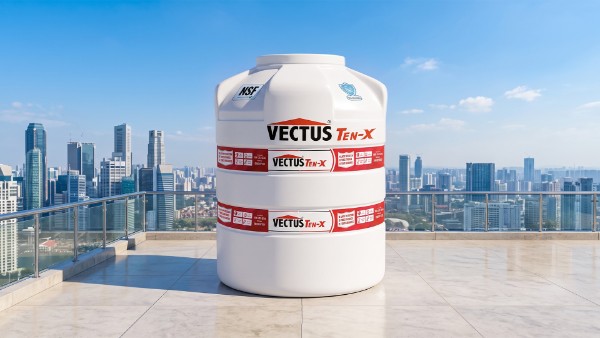
Water Tank Capacity Calculator: Estimating Water Storage Needs in gwalior
Running out of water halfway through the day is inconvenient. But simply installing the biggest storage tank that fits on the terrace is not necessarily the answer either. A tank that is too small may leave a household short during supply gaps, while an unnecessarily large one takes up more space and may not suit the actual requirement.
For households in Shatabdipuram, gwalior, the right water tank capacity depends on a few everyday things: how many people live in the house, roughly how much water they use, how often water is supplied and whether there are additional needs such as gardening or vehicle washing.
A simple water tank capacity calculation can give you a practical starting point before you choose a storage solution.
Start With Your Household’s Daily Water Requirement
There is no single consumption figure that will be exact for every Indian household. Family size is only the first part of the calculation. A few other household habits can change the result considerably.
1. Number of bathrooms
More bathrooms do not automatically mean higher consumption, but larger homes with several bathrooms may have more simultaneous water use.
2. Laundry
The frequency and type of washing-machine cycles can affect daily demand.
3. Kitchen use
Cooking, cleaning vegetables, washing utensils and general kitchen cleaning all contribute to household consumption.
4. Gardening
A terrace garden, lawn or collection of potted plants can add to the amount of water required, particularly in summer.
5. Vehicle washing
Regular car or two-wheeler washing should also be considered instead of being treated as an occasional extra.
6. Guests and family visits
If your home regularly has more occupants than the permanent family size suggests, keeping a reasonable buffer may make sense.
This is why a water tank capacity calculator should guide the decision rather than make it for you.
How the Water Tank Capacity Calculator Works
A basic water tank capacity calculation needs three pieces of information:
Number of family members × estimated daily consumption × number of storage days
For example, the average water use per person per day in urban areas is:
For a family of four people:
Daily requirement: 4 × 135 = 540 litres
Now suppose the home receives a dependable water supply every day. Storage for roughly one day may be enough depending on the household and local conditions.
But if supply comes on alternate days, the calculation changes:
540 × 2 = 1,080 litres
That means the household would need to plan for roughly 1,080 litres of storage for two days of estimated consumption.
Here is a quick illustration based on family size:
These figures indicate the minimum calculated storage needed. Since tanks are generally available in standard capacities, homeowners can consider the nearest suitable size at or above their estimated requirement, while also accounting for available space, supply frequency and regular household usage.
Overhead or Underground Storage?
Water tank capacity is also connected to where and how the tank will be installed.
An overhead water tank is commonly used to supply water for routine household needs. An underground storage solution can be useful where a property needs additional reserve capacity or where the water-supply arrangement calls for a larger storage setup.
Some homes use a combination of both: water is stored at ground or underground level and then pumped to an overhead tank for everyday distribution.
The correct setup depends on the property, water source, available space and plumbing system. For a new home or a major renovation, these factors are best considered during planning rather than after construction is complete.
Key Factors to Consider When Choosing a Water Tank
Once you know approximately how much storage you need, the next step is choosing a suitable plastic water tank. Capacity is only one part of the decision. Also consider:
Installation location: Check whether the tank will be installed on a rooftop, at ground level or underground, as each setup has different requirements.
Exposure to weather: Rooftop tanks remain exposed to heat, sunlight and changing weather conditions, so the product should be designed for outdoor use.
Material and construction: Look at the material used and how the tank is built, as these influence its suitability for long-term household water storage.
Lid and overall design: A properly designed lid and tank structure help support secure and practical water storage.
Product specifications: Check the specifications of the exact model instead of assuming that all tanks have the same number of layers, materials or protective technologies.
Suitability for your home: The final choice should match your storage requirement, available space and installation conditions.
Finding the Right Vectus Tank As Per Your Requirements
Vectus offers overhead, underground and loft storage options for different household and installation needs. Depending on the specific range, Vectus tanks offer features such as:
Multilayer construction: Designed to provide added strength and protection for stored water.
UV-stabilised layers: Help protect relevant rooftop tanks from prolonged exposure to sunlight.
Food-grade materials: Used in suitable ranges to support hygienic household water storage.
Insulation and hygiene-focused layers: Available in selected products to help manage heat exposure and support better storage conditions.
Strong structural design: Ribbing and reinforced construction are used in applicable models to improve strength and stability.
Different capacities and formats: Options are available for varied storage needs and installation spaces.
Long-term product assurance: Selected Vectus tanks come with product guarantees depending on the model and range. Vectus currently states that its water tanks are backed by product guarantees, with the applicable guarantee depending on the product.
When choosing a Vectus plastic water tank, start with the required capacity, then compare the installation type, available space and specifications of the particular product before making a decision.
The idea is simple: first understand how much water your household needs to store. Then choose the Vectus tank that best matches that requirement.
Conclusion
There is no perfect tank size for every family. A five-member household with daily supply can have a smaller backup requirement than a three-member household receiving water once every two days.
That is why it helps to calculate before buying.
For homeowners in Shatabdipuram, gwalior, estimate daily usage, multiply it by the number of people in the home, consider how many days of storage you actually need and account for regular additional uses. Once those numbers are clear, choosing the right plastic water tank becomes a much more informed decision.
Good water storage starts with understanding your own household, not simply choosing the largest capacity available.