
 ₹https://channelpartner.vectus.in/watertanks/-in-gaya/-in-durga-bari/bishnu-polymers-vectus-authorised-partner-water-storage-tank-dealer-in-durga-bari-gaya-in-durga-bari-gaya--4xcufS/articles/home-water-quality-guide-warning-signs-testing-methods-water-tank-care-in-gaya--f49caf0b-a461-4c98-a608-0078b355e53e
Bishnu Polymers - Vectus Authorised Partner | Water storage Tank Dealer in Durga Bari, Gaya
Water Storage Tank Dealer in Durga Bari, Gaya, Bihar
Ramna Road, Nearby Raj Palace, Durga Bari, gaya, bihar - 823001
Request a call back
Bishnu Polymers - Vectus Authorised Partner | Water storage Tank Dealer in Durga Bari, Gaya Social Feeds in Durga Bari, gaya
Home Water Quality Guide: Warning Signs, Testing Methods & Water Tank Care in Gaya
Water can look perfectly clear and still have a quality issue. At the same time, a slightly unusual taste or a white mark on a tap does not automatically mean the water is unsafe. That is why it helps to know what to notice, what you can check at home, and when proper testing is needed.
For Indian households, including homes in Durga Bari, Gaya, there is another part of the journey worth paying attention to: water storage. Water may come from a municipal line, borewell or another source, but it often spends hours or even days in a water tank before reaching the tap. So, source quality and storage conditions both matter.
Here is a practical way to look at water quality at home without jumping to conclusions.
Warning Signs You Should Not Ignore
Your senses cannot confirm whether water is safe to drink, but they can alert you when something has changed. Visible changes, unusual smell or recurring deposits are good reasons to investigate further rather than simply getting used to them.
Some common water quality warning signs include:
Cloudiness or suspended particles: These may point to sediment or increased turbidity.
Yellow or brown discolouration: This can sometimes be linked to rust, sediment or changes in the water supply.
Unusual smell: A strong chlorine, musty or sulphur-like smell deserves attention, especially if it appears suddenly.
Unexpected change in taste: A metallic or noticeably different taste can indicate a change in the source, plumbing or storage conditions.
White deposits on taps and utensils: These are commonly associated with mineral content and hard water.
Sediment collecting at the bottom of containers: If this happens repeatedly, the supply and storage system should be checked.
Importantly, none of these signs identifies the exact cause on its own. Even water that looks and smells normal can contain substances that cannot be detected by sight or taste. BIS drinking-water standards cover physical, chemical and microbiological parameters precisely because visual inspection alone is not enough.
Start with a Simple Visual and Smell Check
Before reaching for a testing kit, start with what is easy.
Fill a clean, transparent glass with fresh water and hold it against natural light. Check whether the water is clear, whether any particles are floating in it and whether material settles at the bottom after a few minutes.
Then smell the water soon after filling the glass. If there has been a noticeable change from what you normally receive, make a note of it.
It can also help to compare water directly from the incoming source with water drawn after it has passed through the household storage system. If the source sample appears normal but the stored sample shows a noticeable change, the plumbing or water tank may need closer inspection.
This comparison does not replace a proper test, but it can help narrow down where to look next.
What Can You Test at Home?
Home testing can be useful for basic water quality screening. The method you choose depends on what you want to understand.
TDS Meter
A TDS meter measures total dissolved solids in water. It gives a quick numerical reading, usually in parts per million or milligrams per litre.
It is useful for spotting significant changes in dissolved mineral content over time. However, a TDS reading cannot tell you whether bacteria, a particular heavy metal or another specific contaminant is present. So, it should never be treated as a complete water-safety test.
BIS specifies an acceptable limit of 500 mg/l for total dissolved solids in drinking water, with a higher permissible limit in the absence of an alternate source.
pH Test Strips or Meter
pH tells you whether water is acidic, neutral or alkaline. Home strips provide a convenient indicative reading, while a calibrated meter can give a more precise result.
Under BIS drinking-water specifications, the acceptable pH range is 6.5 to 8.5.
Hardness Testing
Hard water contains higher levels of minerals such as calcium and magnesium. You may notice scale around taps, showerheads, geysers or utensils before you ever test for it.
Hardness strips and home kits can provide a useful initial indication. BIS lists 200 mg/l as the acceptable limit for total hardness, with 600 mg/l permissible where an alternate source is unavailable.
Multi-Parameter Home Testing Kits
Some kits test several parameters such as pH, hardness, chlorine and other basic characteristics. These can be useful when you want more information than a single TDS reading provides.
Field Test Kits are also used within the Jal Jeevan Mission’s water-quality surveillance programme, alongside laboratory testing.
When Is Laboratory Testing a Better Choice?
Home tests are useful for screening, not for answering every question.
If the water has a persistent unusual smell or colour, if several people in the household are experiencing unexplained gastrointestinal symptoms, if you rely on a borewell, or if a home test repeatedly gives unusual results, laboratory testing is the safer next step.
A laboratory can test for parameters that a simple home kit may not reliably identify, including microbiological contamination and specific chemical contaminants.
For drinking water, BIS standards state that total coliform bacteria and E. coli should not be detectable in a 100 ml sample. That is something a basic TDS meter clearly cannot establish.
So, think of home testing as an early check. When there is a genuine concern about potability, a recognised water-quality laboratory can provide much more useful information.
Do Not Forget the Storage Stage
Testing the source is only part of the picture. What happens after water enters the home also matters.
A water tank may collect sediment over time. A damaged or poorly secured lid can allow dust or other external matter to enter. Long periods between inspections can also mean that problems go unnoticed.
This does not mean that stored water automatically becomes unsafe. It simply means storage should be treated as part of the household water system rather than as a container that can be forgotten once installed.
If there is a sudden difference between source water and water coming from the tap, inspect the water storage and plumbing arrangement as part of the investigation.
Practical Water Tank Care Habits for the Home
A few straightforward habits can help maintain better storage conditions:
Keep the lid properly closed: The tank opening should remain securely covered.
Check for visible damage: Look occasionally for cracks, damaged fittings or other issues that may affect storage.
Inspect the area around the tank: The installation should remain stable, accessible for inspection and free from unnecessary accumulation of dirt.
Schedule periodic cleaning: Sediment can build up over time, so cleaning should not be left until the water visibly changes.
Check inlet and outlet connections: Leaks, damaged fittings or poorly arranged plumbing deserve timely attention.
Pay attention after maintenance: If the tank or plumbing has recently been cleaned or repaired, observe the water afterwards and test it if anything appears unusual.
When selecting a new plastic water tank, it is also worth looking beyond capacity alone. Material, construction, protective layers, outdoor suitability and the design of the lid can all be relevant to long-term household storage.
How Vectus Supports Better Water Storage
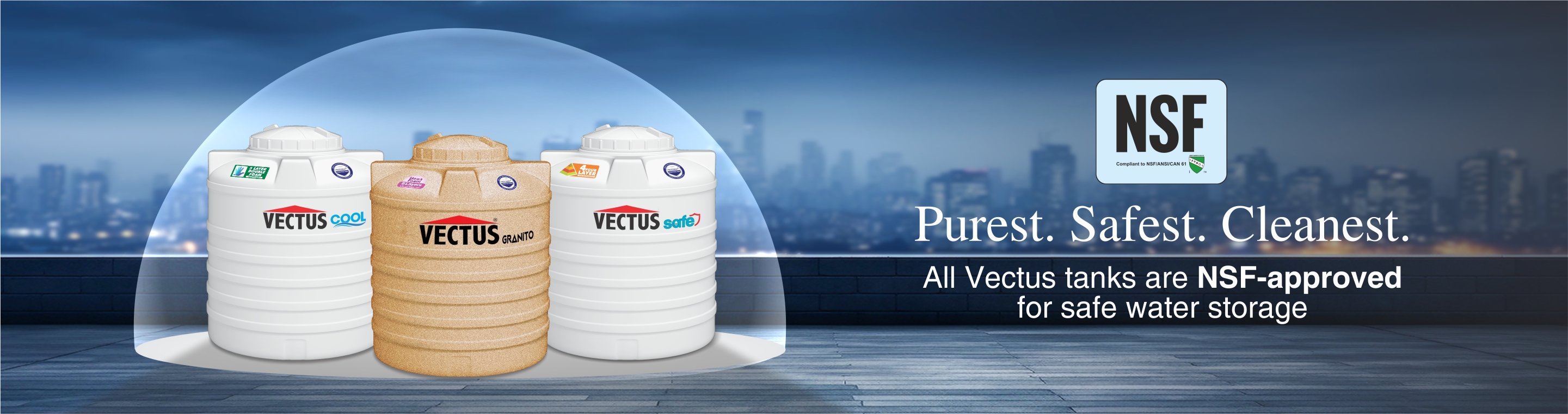
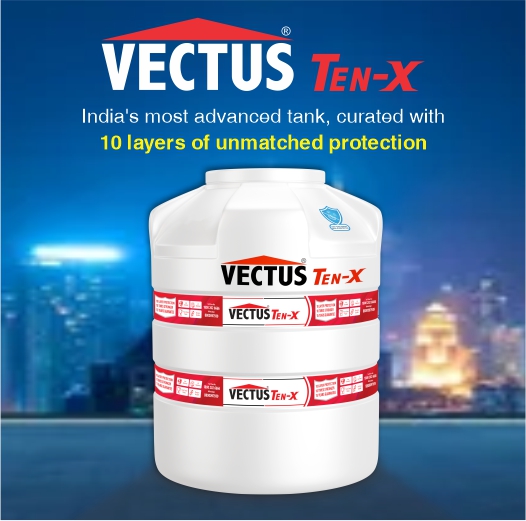
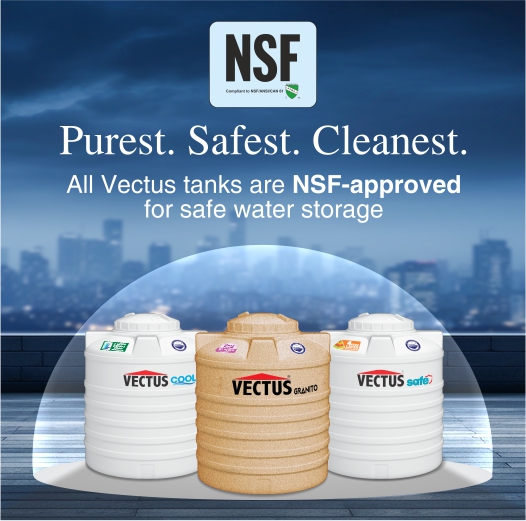
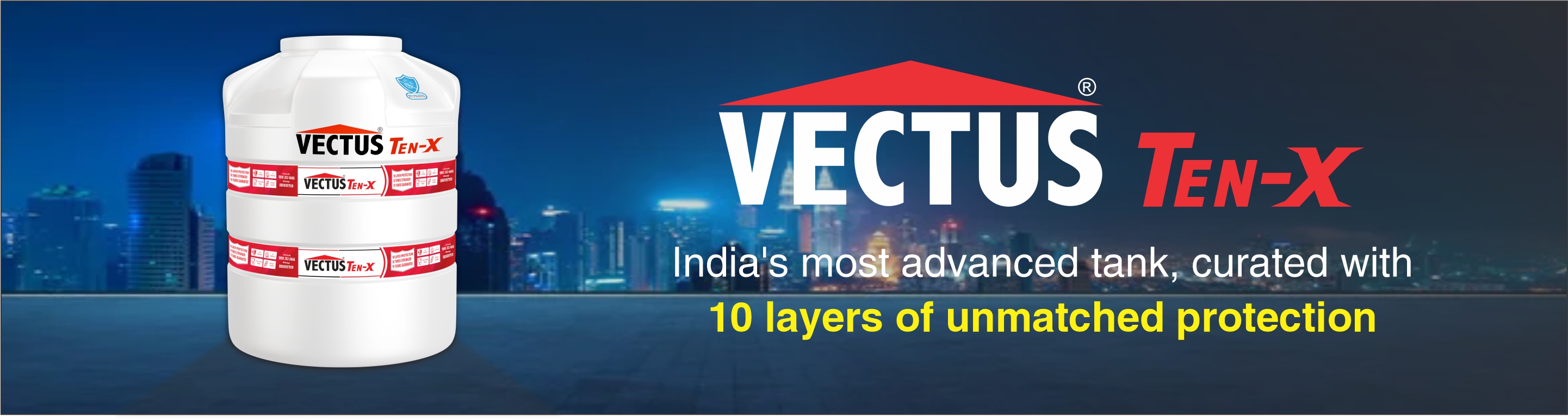
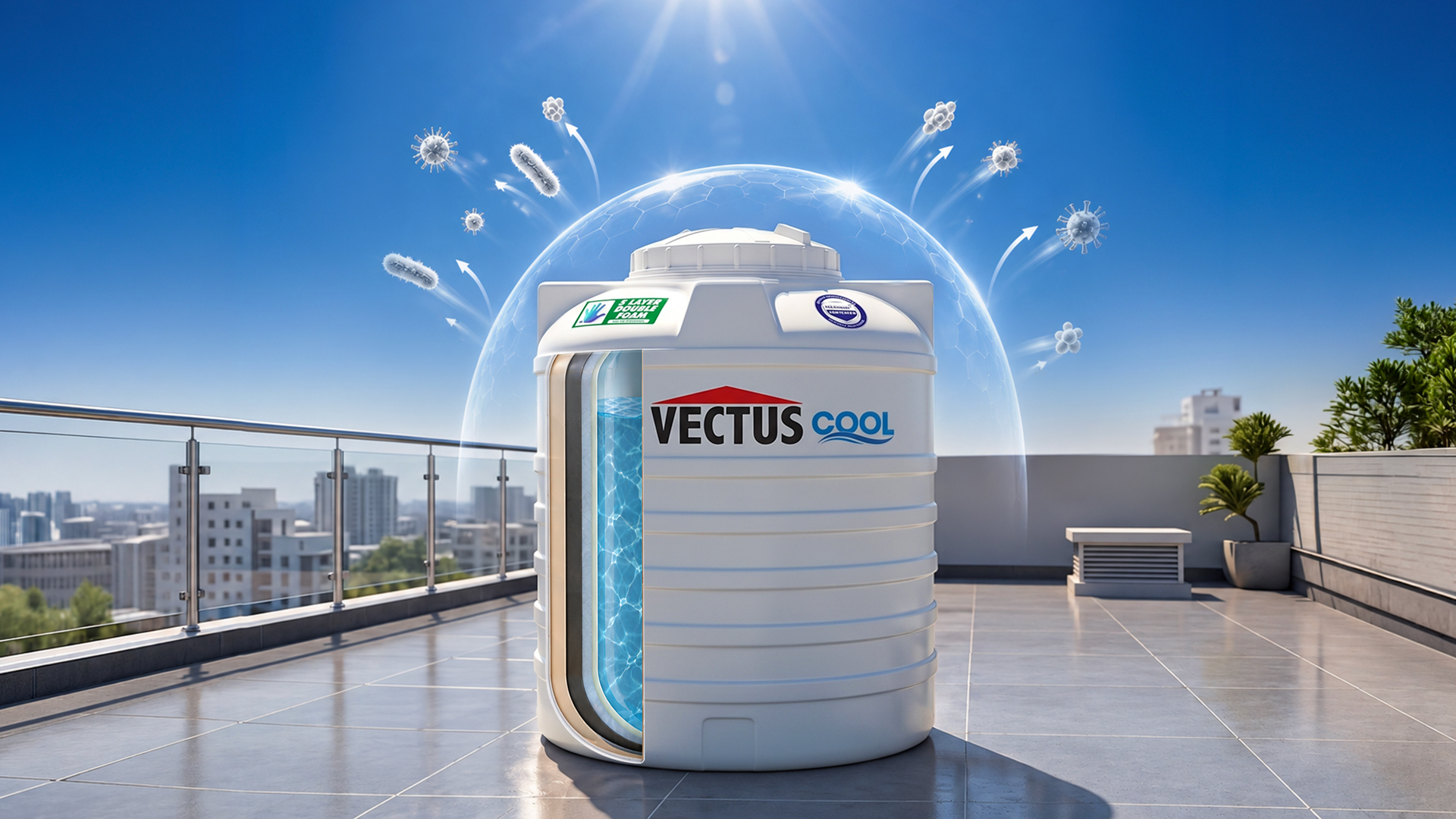
Vectus offers overhead, underground and loft storage solutions for different household and installation needs. Depending on the particular range, Vectus tanks are designed with features such as multilayer construction, UV-stabilised protection, food-grade materials, insulation and hygiene-focused inner layers. Features vary by model, so the specifications of the particular product should always be checked before selection.
When choosing a Vectus plastic water tank, consider:
The required storage capacity
Whether the installation is overhead, underground or indoors
Exposure to sunlight and weather
The construction and protective layers of the selected model
Available installation space
The product specifications relevant to your household requirement
A good storage decision begins with understanding where the tank will be used and how much water the household actually needs.
Water Quality Needs More Than One Check
There is no single home test that answers every water-quality question. Appearance and smell can alert you to a change. A TDS meter can tell you about dissolved solids. Test strips can help check certain basic parameters. And when there is a serious or persistent concern, laboratory testing gives a much clearer picture.
Storage deserves the same practical attention. Keep the water tank properly covered, inspect it periodically, clean it when required and pay attention to changes between source water and stored water.
And when you are choosing a new plastic water tank for your home in Durga Bari, Gaya, look at the complete storage requirement rather than capacity alone. The right product, sensible maintenance and timely testing can together contribute to better water-storage conditions at home.